CASE STUDY
Modernizing a Legacy Enterprise Benefits Platform
End-to-end redesign and migration of a mission-critical SaaS platform supporting thousands of employer benefit plans across Canada
This case study covers the end-to-end modernization of a legacy SaaS benefits platform supporting health and lifestyle spending accounts for organizations across Canada. The initiative focused on replacing a system that had reached its architectural and operational limits while maintaining continuity for existing clients, supporting regulated financial workflows, and enabling long-term product growth.
As the sole Product Manager, I owned product strategy, UX and workflow design, delivery coordination, and change management across the modernization effort.
The Backstory
For several years, the platform enabled benefits administration for a large and growing employer base through advisor-led distribution. While the system had supported the business effectively, over time it reached its capacity and architectural limits.
-
-
Performance degradation as usage scaled
-
Rising defect rates and reliability issues
-
Complex workflows that increased training and support effort
-
Limited flexibility to introduce new benefit types or features
-
Heavy reliance on legacy frameworks and third-party code
-
Incremental fixes extended the platform’s lifespan, but continued growth depended on building a new system capable of supporting long-term operations.
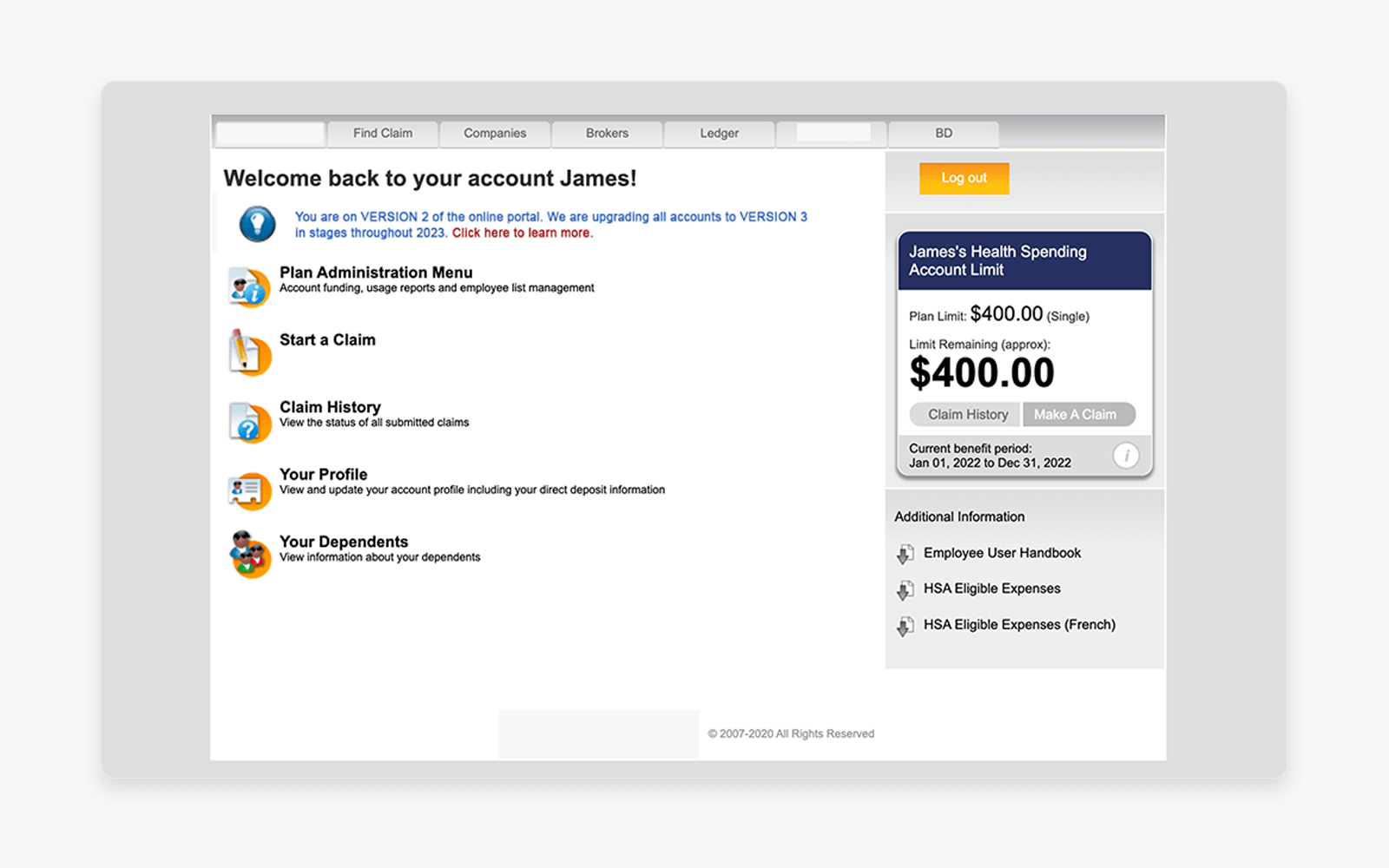
Visual: Legacy employee portal interface
Purpose: Illustrates the complexity, density, and outdated interaction patterns that constrained usability, scalability, and long-term maintenance
The Challenge
The challenge was not simply redesigning the interface, but replacing a core system without disrupting ongoing business operations.
Key constraints included:
-
-
Ensuring uninterrupted service for existing clients
-
Managing risk associated with a system operating at maximum capacity
-
Redesigning complex, role-based workflows used daily by adjudicators and administrators
-
Introducing a modern delivery process while rebuilding the platform
-
Sequencing change to minimize disruption across operations, support, and advisors
-
This required balancing short-term stability with long-term product viability.
Role & Responsibilities
Lead Product Manager (Product, UX, Delivery, and Change Management)
I was the sole Product Manager on the initiative, responsible for:
-
-
Defining product scope and modernization strategy
-
Mapping legacy workflows and identifying friction points
-
Redesigning core experiences and workflows
-
Introducing and running sprint-based delivery
-
Collaborating closely with engineering on sequencing, feasibility, and tradeoffs
-
Facilitating alignment across product, engineering, operations, support, and leadership
-
Planning and executing rollout and migration strategy
-
Developing client-facing communication (email and in-app)
-
Preparing support teams to operate across both legacy and new systems
-
Ensuring documentation and knowledge bases supported parallel systems during transition
-
Phase 1: Platform Redesign & Rebuild
The first phase focused on rebuilding the platform with a modern, scalable foundation.
Key decisions included:
-
Redesigning core workflows using UX best practices
-
Establishing a shared design language across the product
-
Migrating to an updated, in-house tech stack
-
Simplifying mental models for complex adjudication tasks
-
Designing for extensibility to support future benefit offerings
Rather than incrementally patching the legacy system, the platform was rebuilt to support both current needs and future evolution.
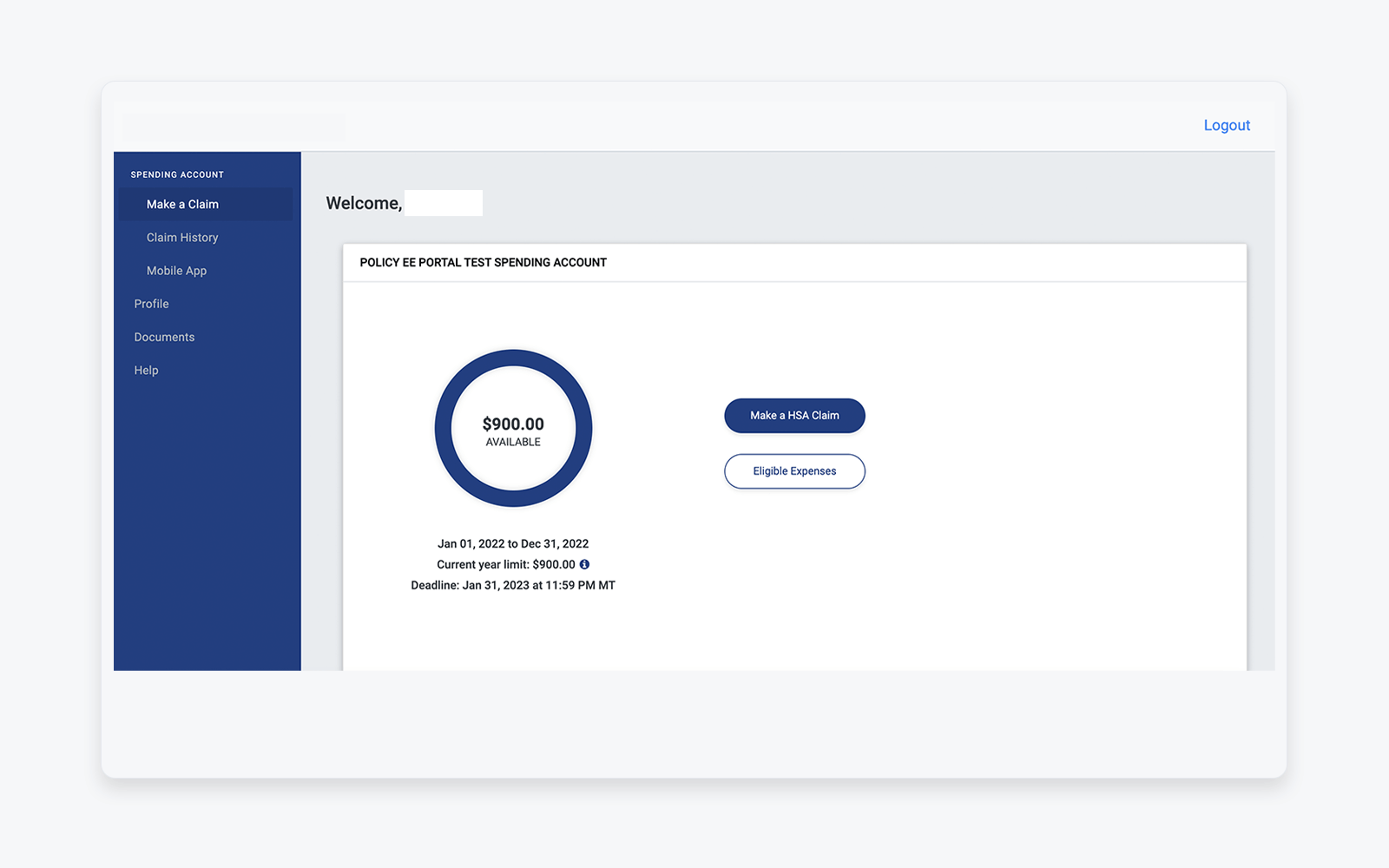
Visual: Modernized employee dashboard in the rebuilt platform
Purpose: Demonstrates improved clarity, visual hierarchy, and scalable design patterns introduced during the modernization effort
Phase 2: Migration & Change Management
The second phase focused on transitioning existing clients to the new platform while maintaining operational continuity.
This included:
-
Planning phased client migrations to reduce risk
-
Supporting parallel operation of legacy and new systems
-
Coordinating in-app messaging and email communication
-
Preparing support teams to assist users on both platforms
-
Updating documentation to reflect dual-system support
-
Aligning advisors and internal teams on rollout timing and expectations
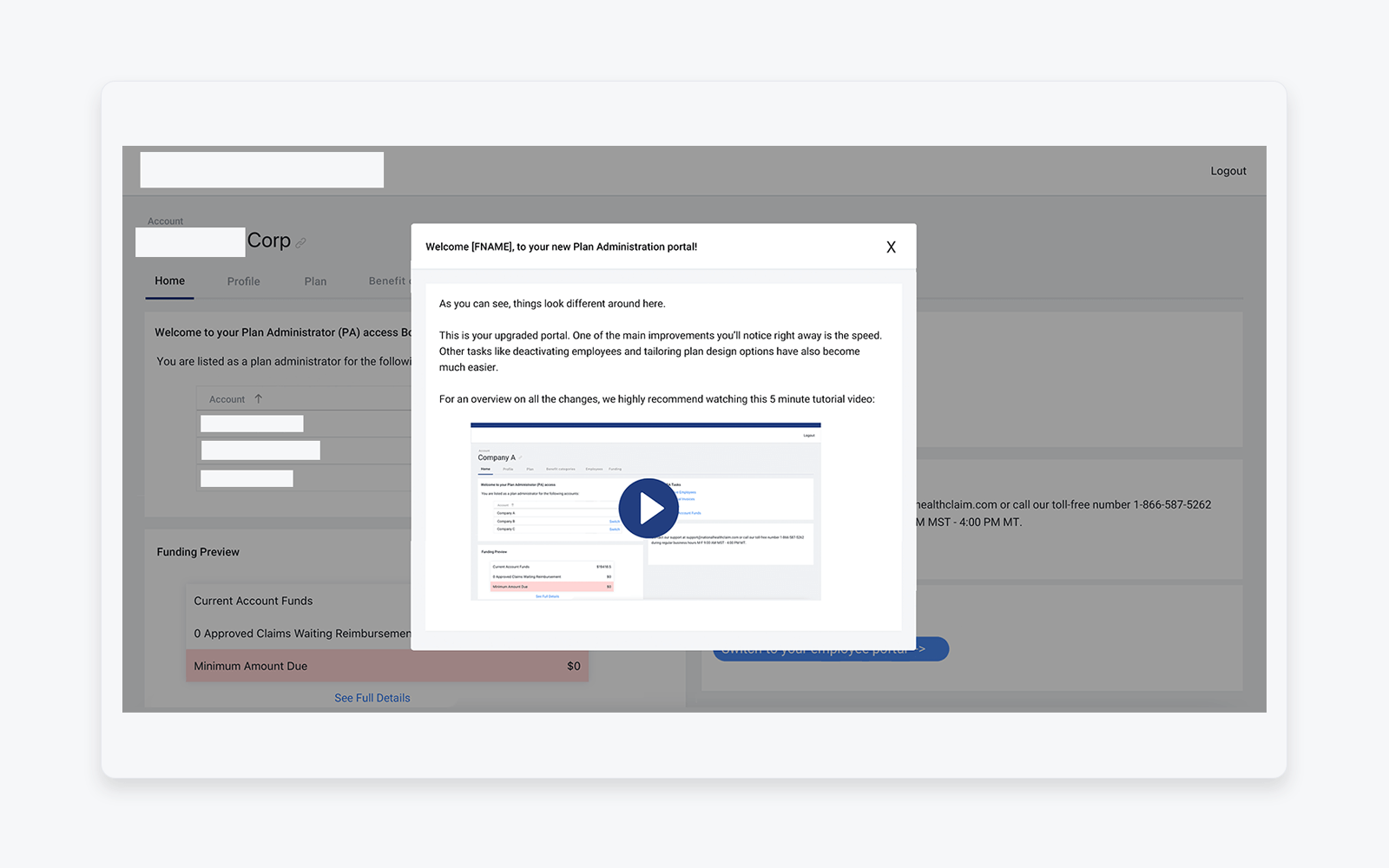
Visual: In-app onboarding and migration communication
Purpose: Shows how product design supported client transition, education, and adoption during parallel operation of legacy and new systems
Outcomes & Impact
While exact metrics are confidential, the modernization delivered measurable improvements across delivery, operations, and platform scalability, including:
-
-
Significant increase in adjudicator efficiency following workflow and system redesign
-
Meaningful reduction in support tickets driven by clearer workflows and improved system reliability
-
Improved delivery predictability through the introduction of sprint-based product development
-
Faster issue resolution due to reduced technical debt and clearer system behavior
-
At the time of my involvement, the platform supported thousands of employer benefit plans and tens of thousands of employees, and was positioned to scale substantially beyond its legacy constraints.
What the New Platform Enabled
-
Faster feature development and iteration
-
Greater flexibility to introduce new benefit offerings
-
Reduced operational risk
-
Improved internal confidence in product scalability
-
A foundation aligned with long-term business growth
Reflection
This project reinforced the importance of treating modernization as both a product and organizational change. Success depended on sequencing work carefully, aligning teams through change, and designing systems that balance immediate operational needs with long-term flexibility.
Confidentiality Note
Screens and data shown are anonymized and representative.
Company names, user information, and specific metrics have been modified or omitted to protect confidentiality.